
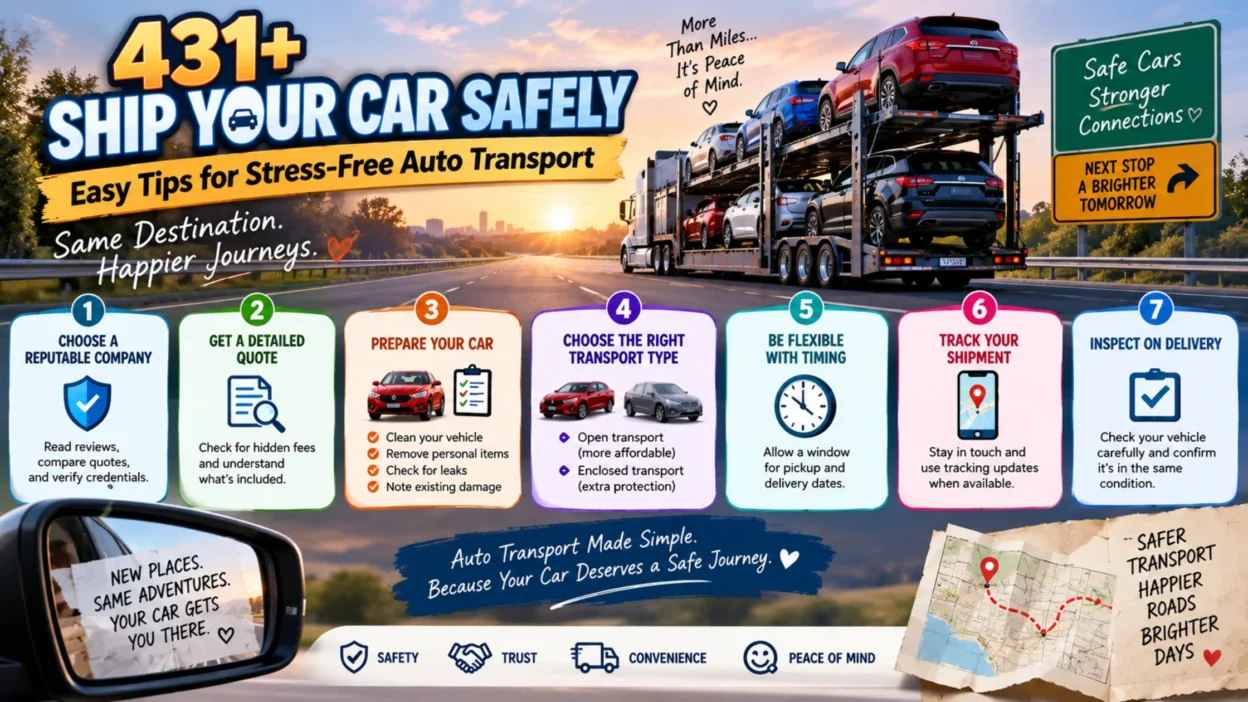
If you need to move your vehicle to another city or state, learning how to ship your car safely can make the entire process easier. Your car is valuable, so proper preparation matters.
At first, auto transport may seem complicated. However, the process becomes much simpler when you know what to check before pickup, what to remove from the vehicle, and what to inspect after delivery.
You also need to choose the right transport company. In addition, insurance, paperwork, vehicle condition, and delivery procedures deserve attention.
This guide explains how to ship your car safely with practical steps you can follow from booking to delivery.
Why Safe Car Shipping Matters
Your vehicle can travel hundreds or even thousands of miles during transport. Along the way, it may face weather, road conditions, loading equipment, and other vehicles on the carrier.
That does not mean problems are inevitable. Good preparation can reduce avoidable risks.
A safe car-shipping plan should include:
- Choosing a reputable carrier
- Comparing quotes
- Checking insurance
- Preparing the vehicle
- Removing personal belongings
- Photographing existing damage
- Reviewing the shipping paperwork
- Inspecting the car at delivery
- Keeping important records
Therefore, do not treat vehicle shipping as something you can arrange at the last minute.
1. Choose a Reputable Auto Transport Company
The first step to ship your car safely is choosing a reliable transport company.
Price is important. However, it should not be the only factor.
Before booking, compare several companies. Look at their reviews, services, communication, insurance information, and terms.
Pay attention to:
- Customer feedback
- Insurance coverage
- Pickup and delivery options
- Estimated delivery times
- Cancellation terms
- Additional fees
- Communication methods
- Transport equipment
- Company experience
A company that communicates clearly is often easier to work with throughout the process.
Compare Several Quotes
Do not immediately accept the cheapest quote.
Instead, request several estimates. Then compare what each company includes.
Ask whether the quote covers:
- Pickup
- Delivery
- Fuel-related charges
- Door-to-door service
- Terminal fees
- Special vehicle requirements
- Enclosed transport
A low initial quote may not always be the final price.
2. Check Insurance Coverage
Insurance is one of the most important things to understand before you ship your car safely.
Ask the transport company what type of coverage it carries. Find out what damage is covered and whether a deductible applies.
You should also contact your own insurance provider. Your personal policy may offer additional protection, depending on its terms.
Questions About Insurance
Ask the carrier:
- What does the policy cover?
- What is the coverage limit?
- Is there a deductible?
- Are pre-existing damages excluded?
- What happens if damage occurs during loading?
- What happens if damage occurs during transit?
- How do I file a claim?
- How long do I have to report damage?
Get important answers in writing.
That way, you will have a clear record if questions arise later.
3. Decide Between Open and Enclosed Transport
Another important decision is the type of carrier you want.
Open Transport
Open transport is commonly used for everyday vehicles.
Your car travels on an open carrier with other vehicles. It is usually more affordable and widely available.
However, the vehicle remains exposed to normal outdoor conditions during transportation.
Enclosed Transport
Enclosed transport places the vehicle inside a covered trailer.
This option offers more protection from weather and road debris. It can make sense for:
- Classic cars
- Luxury cars
- Collector vehicles
- Restored vehicles
- High-value cars
The cost is usually higher.
Therefore, think about your vehicle’s value, condition, and your budget before deciding.
4. Prepare Your Car Before Pickup
Good preparation can make the shipping process smoother.
Start preparing your vehicle several days before pickup.
Check the carrier’s instructions first. Then follow its specific requirements.
Your preparation may include:
- Cleaning the vehicle
- Removing personal items
- Checking tire pressure
- Checking the battery
- Looking for leaks
- Removing loose accessories
- Disabling the alarm
- Leaving the recommended fuel level
- Photographing the vehicle
For vehicle-specific naming inspiration, you can also browse our white dog names if you happen to be transporting a white canine companion separately.
5. Clean the Exterior
Washing your car before transport is more useful than it may seem.
A clean exterior makes existing damage easier to spot.
You can clearly see:
- Scratches
- Dents
- Paint chips
- Cracks
- Scuffs
- Marks
You do not need an expensive detailing service.
A basic wash is usually enough for a proper visual inspection.
6. Clean Out the Interior
Next, remove unnecessary items from the cabin.
Check:
- Seats
- Floor areas
- Door pockets
- Glove compartment
- Center console
- Trunk
- Spare-tire area
Remove valuables and personal belongings.
This includes:
- Electronics
- Bags
- Clothing
- Important documents
- Jewelry
- Chargers
- Loose accessories
Your carrier may have specific rules about personal items. Therefore, ask before leaving anything inside.
7. Remove Personal Belongings
This step deserves extra attention.
Many people assume they can use the car as extra storage during transport. However, that may not be allowed by the carrier.
Personal items can also move around during loading and transportation.
So, remove anything that is not required for the vehicle itself.
Do Not Forget the Trunk
The trunk is easy to overlook.
Open it before pickup and check every compartment.
Also inspect:
- Under the seats
- Door storage
- Glove box
- Center console
- Spare-wheel compartment
A final check can prevent you from leaving something valuable behind.
8. Photograph Your Vehicle Before Shipping
One of the smartest ways to protect yourself is to document the car’s condition.
Take clear photographs before the carrier arrives.
Capture:
- Front
- Rear
- Left side
- Right side
- Roof
- Wheels
- Windshield
- Mirrors
- Interior
- Dashboard
- Odometer
- Existing scratches
- Existing dents
Take close-up photos of noticeable damage.
You can also record a short video while walking around the vehicle.
Why Documentation Helps
Suppose the car already has a small scratch.
A clear photograph establishes that the scratch existed before transport.
Later, you can compare the condition with your delivery photos.
This creates a useful before-and-after record.
9. Record the Vehicle Mileage
Take a photograph of the odometer before pickup.
The mileage provides another useful reference point.
Write down the mileage as well if your paperwork includes a section for it.
Then compare it after delivery.
A small difference may occur because the vehicle could need to be moved during loading, unloading, or storage. However, keeping a record gives you a clear baseline.
10. Check Tires and Battery
Your vehicle should be prepared according to the carrier’s instructions.
Check the tires before pickup.
They should generally have appropriate pressure. Underinflated or overinflated tires can create problems during loading and handling.
Also check the battery.
If the battery is weak, inform the carrier.
Tell the Carrier About Mechanical Problems
Do not hide a mechanical issue.
Tell the transport company if your car:
- Does not start
- Has weak brakes
- Has a flat tire
- Has a battery problem
- Has a fluid leak
- Requires special loading equipment
An inoperable vehicle may require special arrangements.
Giving accurate information helps the carrier prepare the right equipment.
11. Check for Fluid Leaks
Walk around the vehicle before shipping.
Look underneath for signs of leaking fluids.
If you notice a leak, tell the carrier before pickup.
This is especially important because the carrier needs to know about vehicle conditions that could affect loading or other vehicles.
A quick inspection can help prevent surprises.
12. Remove Exterior Accessories
Loose exterior accessories can become damaged during transport.
Depending on the carrier’s requirements, you may need to remove or secure:
- Bike racks
- Roof boxes
- Cargo carriers
- Removable antennas
- Decorative items
- Custom accessories
Ask the carrier what should be removed.
Do not assume that every accessory can remain attached.
13. Disable Your Alarm
Vehicle alarms can cause unnecessary problems during transport.
A repeatedly activated alarm may drain the battery or disturb the carrier.
If possible, disable the alarm before pickup.
If you cannot completely disable it, tell the driver how to turn it off.
This small step can make transportation easier.
14. Remove Toll Tags
If your car has an electronic toll device, remove it when appropriate.
Otherwise, the device could potentially register toll activity while the vehicle is being transported.
Also remove:
- Parking passes
- Garage access cards
- Temporary permits
- Other electronic access devices
Check your carrier’s instructions if you are unsure.
15. Leave the Correct Amount of Fuel
Your car does not normally need a full tank for transport.
Many carriers recommend keeping the fuel level relatively low, often around one-quarter of a tank.
However, requirements can differ.
Therefore, follow the transport company’s instructions.
A lower fuel level can also reduce unnecessary weight.
16. Secure Your Car Keys
Ask the carrier which keys are required.
Usually, the driver needs access to the vehicle for loading and unloading.
You may not need to hand over every key you own.
Keep spare keys with you unless the carrier specifically requests them.
Also avoid attaching valuable keychains or personal items to the keys you give the driver.
17. Read the Shipping Contract
Before signing, read the agreement carefully.
Do not focus only on the price.
Review:
- Pickup terms
- Delivery terms
- Cancellation policy
- Insurance information
- Payment terms
- Additional fees
- Vehicle requirements
- Damage procedures
If something is unclear, ask questions before booking.
A clear agreement helps prevent misunderstandings later.
18. Review the Bill of Lading
The Bill of Lading is an important document in auto transport.
It records shipment information and vehicle condition.
At pickup, review the document carefully.
Make sure the recorded damage matches what you can see on the vehicle.
If something is missing, ask the driver to correct it before the vehicle leaves.
Keep your copy after signing.
19. Inspect the Vehicle With the Driver
Do not simply hand over the keys and walk away.
Complete the pickup inspection with the driver.
Walk around the vehicle together.
Check each side and point out existing damage.
Look at:
- Bumper marks
- Door dents
- Scratches
- Paint chips
- Cracked glass
- Wheel damage
- Mirrors
- Roof damage
Take additional photos if needed.
This step creates a shared record of the vehicle’s condition.
20. Keep Your Documentation
Save every important document.
Create a folder for:
- Shipping contract
- Quote
- Insurance details
- Bill of Lading
- Condition report
- Pickup photographs
- Delivery photographs
- Receipts
- Emails
- Text messages
Digital copies are useful.
You can also keep printed copies of important paperwork.
21. Stay Available During Transportation
Good communication can make auto transport easier.
Keep your phone available around pickup and delivery dates.
The carrier may need to contact you about:
- Pickup timing
- Route changes
- Delivery timing
- Location questions
- Access issues
If your plans change, notify the carrier quickly.
Clear communication reduces confusion.
22. Inspect the Car Immediately at Delivery
The delivery inspection is just as important as the pickup inspection.
When your car arrives, inspect it before completing the handoff.
Compare it with your original photographs.
Check:
- Front bumper
- Rear bumper
- Doors
- Hood
- Roof
- Wheels
- Mirrors
- Windshield
- Windows
- Interior
- Accessories
Look for any new damage.
Photograph the Vehicle Again
Take fresh photos from the same angles you used before shipping.
This makes comparison easier.
If you find a new scratch, dent, or other issue, photograph it closely.
Then follow the carrier’s damage-reporting process.
23. Report Damage Promptly
If you notice damage, do not wait several days.
Document it immediately.
You should have:
- Photos of the damage
- Original photos
- Delivery photos
- Condition report
- Bill of Lading
- Carrier contact details
Follow the carrier’s instructions for submitting a claim.
The sooner you report an issue, the easier it may be to organize the relevant documentation.
24. Avoid These Common Car Shipping Mistakes
A few mistakes can make the process more difficult.
Choosing Only by Price
A cheap quote is not automatically a good deal.
Compare the complete service.
Skipping the Inspection
Never assume everything is fine without checking.
Inspect the vehicle at both pickup and delivery.
Leaving Valuables Inside
Personal belongings can create unnecessary risks.
Remove them before shipping.
Forgetting to Take Photos
Photos provide a useful condition record.
Take enough pictures before the vehicle leaves.
Ignoring the Contract
Read the terms before signing.
Pay attention to fees, insurance, and cancellation rules.
Waiting Until Pickup Day
Last-minute preparation can create stress.
Prepare the car in advance.
Failing to Mention Mechanical Problems
The carrier needs accurate information.
Tell them about any issue that could affect loading or transport.
Car Shipping Preparation Checklist
Use this checklist before your carrier arrives.
- Choose a reputable carrier
- Compare multiple quotes
- Check insurance coverage
- Read the contract
- Gather required documents
- Wash the vehicle
- Remove personal belongings
- Empty the trunk
- Remove toll tags
- Remove loose accessories
- Check tire pressure
- Check the battery
- Look for fluid leaks
- Disable the alarm
- Record the mileage
- Photograph the entire vehicle
- Record existing damage
- Review the Bill of Lading
- Keep a copy of the paperwork
- Inspect the car at delivery
- Photograph the vehicle again
- Report any new damage promptly
Open vs. Enclosed Transport
Choosing the right transport method depends on your needs.
| Feature | Open Transport | Enclosed Transport |
|---|---|---|
| Typical cost | Lower | Higher |
| Weather exposure | Higher | Lower |
| Road debris exposure | Higher | Lower |
| Availability | Widely available | More limited |
| Best for | Everyday vehicles | Special or valuable vehicles |
| Carrier capacity | Usually higher | Usually lower |
Open transport is a practical choice for many standard vehicles.
Enclosed transport may make more sense when additional protection is important.
How to Ship Your Car Safely Across the Country
Long-distance shipping requires the same basic preparation as shorter transport.
However, longer routes may involve more time and changing conditions.
Before a cross-country shipment:
- Research several carriers.
- Compare written quotes.
- Confirm insurance.
- Choose open or enclosed transport.
- Prepare the vehicle.
- Remove personal belongings.
- Photograph the car.
- Review the pickup inspection.
- Keep communication open.
- Inspect the car at delivery.
Planning early can make a long-distance move much easier.
How to Ship Your Car Safely to Another State
Moving to another state is one of the most common reasons people use auto transport.
Start by confirming:
- Pickup address
- Delivery address
- Vehicle condition
- Preferred transport method
- Pickup window
- Delivery window
- Insurance
- Required paperwork
Also consider whether your destination has narrow streets, gated access, or other restrictions.
The carrier may need a safe location for loading or unloading.
How to Ship a Non-Running Car Safely
A vehicle that does not start may still be transportable.
However, tell the company before booking.
A non-running vehicle may require special equipment such as a winch or other loading assistance.
Give the carrier accurate information about:
- Steering
- Brakes
- Tires
- Battery
- Engine
- Transmission
- Ground clearance
This helps the company determine the appropriate transport arrangement.
How to Ship a Classic Car Safely
Classic cars often require extra care.
Consider enclosed transport if the vehicle has significant value or a sensitive finish.
You should also take detailed photographs.
Document:
- Paint condition
- Chrome
- Wheels
- Interior
- Glass
- Trim
- Existing imperfections
Ask the carrier how the vehicle will be secured.
A little extra planning can be worthwhile for a valuable automobile.
How to Ship Your Car Safely in Winter
Winter transportation can bring additional challenges.
Snow, ice, and poor road conditions can affect routes and schedules.
Therefore:
- Check the weather forecast
- Allow extra delivery time
- Keep communication open
- Follow the carrier’s preparation instructions
- Confirm pickup and delivery locations
- Protect important documents from moisture
Do not schedule your plans too tightly around an exact delivery hour.
Transport schedules can change because of road and weather conditions.
How to Make Car Shipping Less Stressful
You can make the process easier by staying organized.
Create a simple timeline.
One Week Before
Research carriers and confirm the booking.
A Few Days Before
Clean the car and remove belongings.
The Day Before
Take photographs and check the vehicle.
Pickup Day
Inspect the car with the driver and review the paperwork.
Delivery Day
Inspect the vehicle again before completing the handoff.
This simple system keeps important tasks from being forgotten.
Frequently Asked Questions About Shipping Your Car Safely
1. What is the safest way to ship a car?
The safest approach combines a reputable carrier, appropriate insurance, careful vehicle preparation, detailed photographs, and thorough inspections at pickup and delivery. Enclosed transport can provide additional protection for valuable vehicles.
2. Should I remove personal items before shipping my car?
Yes. Remove valuables and personal belongings unless your carrier specifically allows certain items. Personal property may not receive the same protection as the vehicle.
3. Should I take pictures before shipping my car?
Yes. Take clear photos of the exterior, interior, wheels, windows, dashboard, mileage, and existing damage. These images provide a useful record of the vehicle’s condition.
4. Is enclosed transport better than open transport?
Enclosed transport offers additional protection from weather and road debris. Open transport is more common and usually costs less. The best option depends on your vehicle and budget.
5. How much fuel should I leave in my car?
Many carriers recommend keeping the fuel level around one-quarter full. However, always follow your transport company’s specific instructions.
6. What should I do if my car arrives damaged?
Document the damage immediately with photographs. Compare it with your original condition records and report the issue through the carrier’s claims process as soon as possible.
Final Thoughts
Knowing how to ship your car safely can make vehicle transport much easier. The process starts with choosing a reputable carrier and understanding the company’s insurance and contract terms.
Next, prepare the vehicle properly. Clean it, remove personal belongings, check its basic condition, and photograph everything before pickup. During pickup, review the vehicle with the driver. Make sure existing damage is recorded accurately on the appropriate paperwork.
Then, stay in contact during transportation. Finally, inspect the vehicle carefully when it arrives. Compare it with your original photographs and report any new damage promptly. A little preparation goes a long way. When you plan ahead and keep good records, you can make the auto transport process more organized and less stressful.
You can also explore more useful naming content on Namelixa, including funny camper names, walkie-talkie names, and funny home names for Life360 if you are planning a move or road trip with friends and family.
For additional vehicle-safety information, explore roads.

Muhammad Arslan is the founder of Namelixa and a passionate researcher of names and their meanings. He shares helpful baby names, pet names, and creative name ideas to help readers find the perfect name.